|
libiec61850.NET 1.6.1
IEC 61850 .NET API for libiec61850 protocol library
|
|
libiec61850.NET 1.6.1
IEC 61850 .NET API for libiec61850 protocol library
|
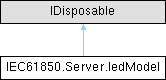
Representation of the IED server data model. More...
Public Member Functions | |
| IedModel (string name) | |
| Initializes a new instance of the T:IEC61850.Server.IedModel class. | |
| void | Destroy () |
| Releases all resource used by the IEC61850.Server.IedModel object. | |
| void | Dispose () |
| Releases all resource used by the IEC61850.Server.IedModel object. | |
| LogicalDevice | GetDeviceByInst (string ldInst) |
| void | SetIedName (string iedName) |
| Change the IED name of the data model. | |
| ModelNode | GetModelNodeByObjectReference (string objectReference) |
| Gets the model node by full object reference. | |
| ModelNode | GetModelNodeByShortObjectReference (string objectReference) |
| Gets the model node by short object reference (without IED name) | |
| SVControlBlock | GetSVControlBlock (LogicalNode logicalNode, string svcbName) |
Static Public Member Functions | |
| static IedModel | CreateFromFile (string filename) |
Creates a new IEC61850.Server.IedModel instance with the data model of async config file. | |
Representation of the IED server data model.
| IEC61850.Server.IedModel.IedModel | ( | string | name | ) |
Initializes a new instance of the T:IEC61850.Server.IedModel class.
| name | IED name |
|
static |
Creates a new IEC61850.Server.IedModel instance with the data model of async config file.
| filename | fila name of the configuration (.cfg) file |
| void IEC61850.Server.IedModel.Destroy | ( | ) |
Releases all resource used by the IEC61850.Server.IedModel object.
| void IEC61850.Server.IedModel.Dispose | ( | ) |
Releases all resource used by the IEC61850.Server.IedModel object.
Call Dispose when you are done using the IEC61850.Server.IedModel. The Dispose method leaves the IEC61850.Server.IedModel in an unusable state. After calling Dispose, you must release all references to the IEC61850.Server.IedModel so the garbage collector can reclaim the memory that the IEC61850.Server.IedModel was occupying.
| LogicalDevice IEC61850.Server.IedModel.GetDeviceByInst | ( | string | ldInst | ) |
| ModelNode IEC61850.Server.IedModel.GetModelNodeByObjectReference | ( | string | objectReference | ) |
Gets the model node by full object reference.
| objectReference | Full object reference including the IED name |
| ModelNode IEC61850.Server.IedModel.GetModelNodeByShortObjectReference | ( | string | objectReference | ) |
Gets the model node by short object reference (without IED name)
| objectReference | Object reference without IED name (e.g. LD0/GGIO1.Ind1.stVal) |
| SVControlBlock IEC61850.Server.IedModel.GetSVControlBlock | ( | LogicalNode | logicalNode, |
| string | svcbName ) |
| void IEC61850.Server.IedModel.SetIedName | ( | string | iedName | ) |
Change the IED name of the data model.
| iedName | the new IED name |
 1.13.2